

Hotel supply planning
How much shampoo and body wash does a hotel use?
There is no universal number. A useful forecast starts with bathrooms, occupancy, average guests, supply days and an expected daily dose for each formula.
Updated 13.08.20267 minute read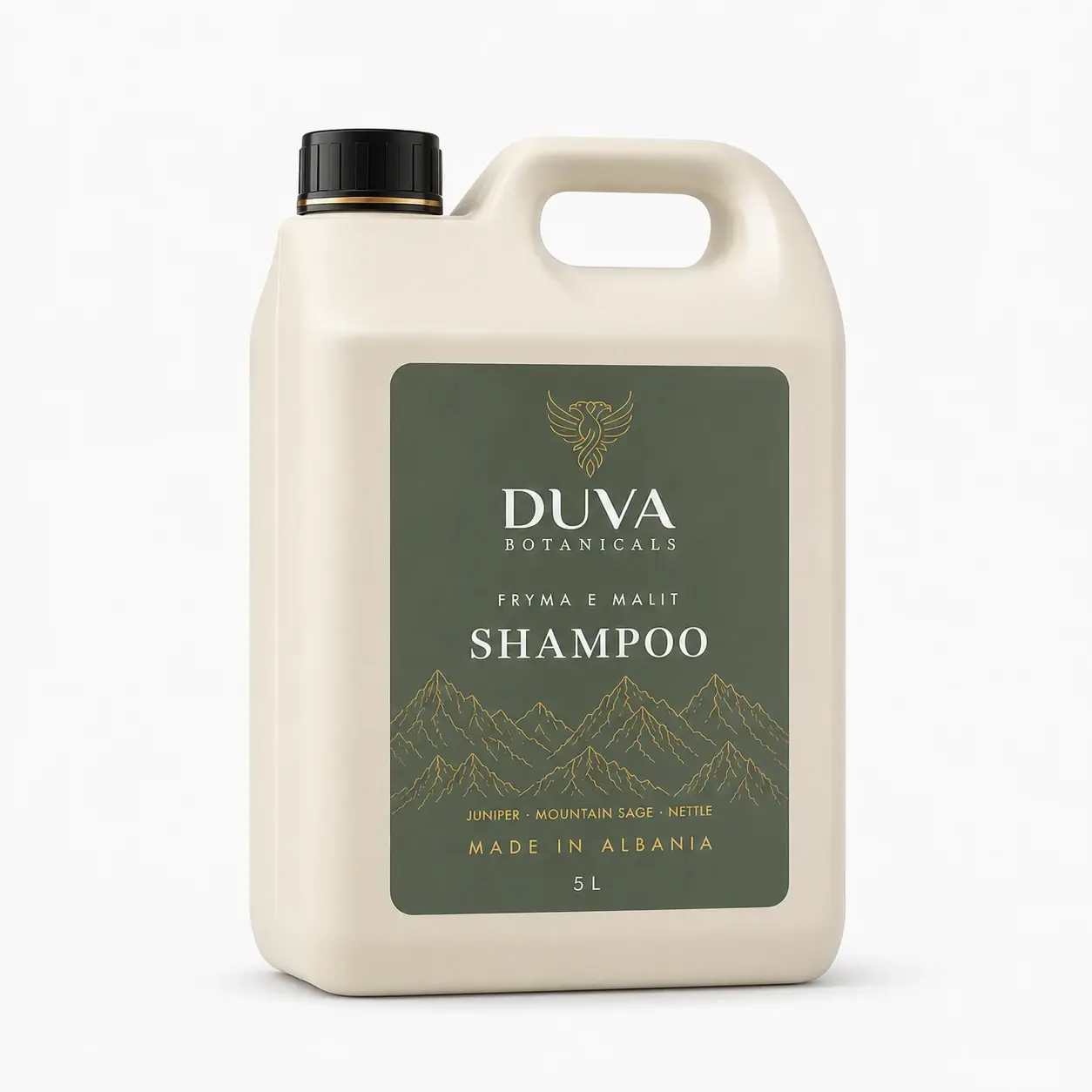
Bathrooms, occupancy, guests, days and daily usage
Shampoo, conditioner, body wash and hand wash are not used equally
Real usage improves every subsequent refill order
The basic forecasting formula
For a specific product, multiply bathroom count by occupancy, average guests per occupied bathroom, days in the period and expected millilitres per guest per day. Divide the result by 1,000 to convert it into litres.
Monthly litres = bathrooms × occupancy × guests × days × ml per guest per day ÷ 1,000.
- Use occupancy as a decimal: 70% = 0.70
- Calculate each formula separately
- Separate guest rooms from spa and shared facilities
- Add working reserve according to your reorder cycle
An illustrative 40-bathroom example
Assume 40 bathrooms, 70% occupancy, 1.5 average guests, 30 days and a working assumption of 20 ml per guest per day for the formula being estimated.
40 × 0.70 × 1.5 × 30 × 20 ml = 25,200 ml, or 25.2 L. In a 5 L format, that means six units to cover the forecast without rounding down.
This is a mathematical example, not a consumption benchmark. Dose and real guest behaviour can change the result substantially.
Why products need separate forecasts
Body wash may be used more frequently than conditioner. Hand wash is influenced by basin use and may also be required in reception, restaurant, spa and shared washrooms.
A four-formula collection does not mean a hotel should order the same litres of each product. Separate planning reduces both shortages and unnecessary reserve stock.
From litres to refill units
Divide forecast volume by refill size and round up. Then consider whether delivery time and storage require an additional working reserve.
A 12.4 L forecast requires at least three 5 L refills. The difference is not necessarily waste: it becomes opening stock for the following period.
Measure the first four weeks
Record the date, formula and volume whenever the team opens a new refill. Compare product usage with occupied rooms, not total room inventory alone.
After one month, replace assumptions with your property's real consumption. Review again when the season, guest profile or average length of stay changes.
- Date each refill is opened
- Product and refill volume
- Occupied rooms during the period
- Dispenser refills in shared facilities
- Events or periods with unusual usage
Frequently asked questions
Before the supply enquiry.
How many litres of shampoo does a hotel room use?
It depends on occupancy, guests, length of stay, dose and usage behaviour. Start with an assumption and replace it with measured property data after the first month.
Should we order the same volume of every product?
No. Shampoo, conditioner, body wash and hand wash have different usage patterns and should be forecast separately.
How much reserve stock should a hotel hold?
Reserve depends on supply lead time, seasonality, storage and the property's tolerance for shortages. Keep it visibly separate from forecast consumption.